What happens when differences in worldviews, values and ways of making meaning remain unaddressed? And how might we transform disagreement from a source of division, domination and violence into an opportunity for mutual learning and collective problem-solving?
These questions have shaped my intellectual and practical work for many years. They are at the heart of my new book, Coloniality in Gender and Development: Proposing an Epistemology of Disagreement, published by Routledge and now available for free download.
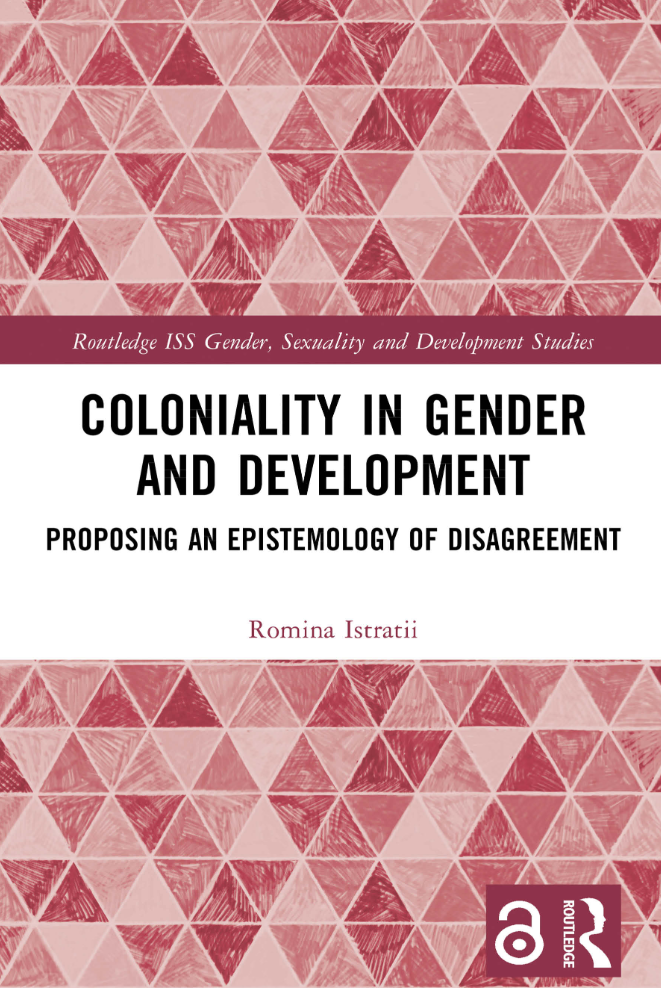
Over 15 years of anthropological research and practice across Africa and Europe, I have sought to explore and redress epistemic inequalities in the production of international development knowledge, especially around Gender and Development (GAD) issues, with a focus on gender-based violence (GBV). My motivation has been to increase awareness around whose knowledge is recognised, whose experiences are marginalised and whose assumptions become the basis for defining social problems and deciding how they should be addressed in international development practice.
My book’s argument is that GAD theory has been historically grounded in Western cultural systems and metaphysics (i.e. foundational theories about humanity, gender and violence), shaping GAD theory, international standard-setting and responses to gender-related inequalities and violence internationally. Building on post-colonial, decolonial and other critical Asian, African and Islamic works – such as those advanced by Oyèrónkẹ́ Oyěwùmí (1997), Chandra Talpade Mohanty (1988), Saba Mahmood (2005), María Lugones (2008) and others – and juxtaposing these with the evolution of Western feminist theory since the 14th century, I illustrate how this cultural and epistemic situatedness has predominantly favoured Western Euro-North American Christian, secular and post-structuralist worldviews on gender, with little consideration given to non-Western, faith-based or other cultural understandings of the same. This is reflected not only in the gender/sex distinction, which has been introduced, accepted and promoted as a universal analytical distinction despite the fact that many cultural worldviews do not operate with the same binaries and definitions, but also in the framing of gender as inherently structured by inequalities between men and women globally, as many before me have argued. This framing persists even within more recent post-structuralist paradigms that challenge universalist and humanist positions. I argue that it largely persists because of a hegemonic ‘epistemic community’ (Haas, 1989) that has legitimised itself through paradigm-making, knowledge brokering and strategic alliance-building, underpinned by funding, publishing and other structural inequalities.
The book is based on the proposition that the GAD sector has yet to be epistemologically and metaphysically decolonised. Why does this matter? I believe that it matters because a Western-centric approach to theory-making continues epistemic colonialities, ignores cultural, religious and worldview differences in the world and fails to pay sufficient attention to intra-community diversity of perspectives and power struggles that cannot easily be resolved by promoting a theoretical mono-narrative or one-size-fits-all solution. Hence, approaches proposed in the mainstream to respond to gender inequalities or GBV may not always resonate with the contextual realities of different communities or groups within those communities, leaving the real issues unaddressed.
In the current book, written 30 years after the Beijing conference on women and the mainstreaming of gender internationally, I aim to reframe the sector’s main contemporary challenge not always or necessarily as a clash between ‘feminism’ or ‘gender equality’ and those who oppose it, as often framed in GAD circles, but in most cases as a considerably more complex and potentially unresolved epistemological and ethical problem that requires epistemic humility and new conceptual and methodological tools to be managed.
A journey across difference
My interest in these questions is both intellectual and personal. Born in Moldova and raised in Greece in a migrant family, I encountered early the effects of migration, economic inequality, religious belonging and cultural difference. Later, through studies, research and anthropological encounters in North America, Asia, Africa and Europe, I became increasingly attentive to the ways in which people understand the world through different histories, experiences and systems of meaning-making, including religious worldviews and indigenous normative and value frameworks.
These experiences led me to question a common tendency in cross-cultural GAD work and responses to gender inequalities and abuses: treating disagreement primarily as a problem of insufficient knowledge in non-Western communities, cultural or religious bias or opposition to gender equality aims and programmes. My work instead revealed that people often disagree not necessarily because they reject women’s rights, but because they approach an issue from fundamentally different assumptions about what constitutes knowledge, what is morally valuable and how a problem should be understood and addressed. Many communities may feel predisposed to push back gender aims or programmes due to colonial histories and ongoing epistemic inequalities that do not necessarily emerge from a foundational value disagreement. At other times, differences in values are exaggerated and instrumentalised by power-holding actors within different communities, who appropriate both cultural differences and anti-feminist narratives in pursuit of their own power interests.
When the underlying motivations and causes behind these differences and disagreements remain unexamined, without full recognition of the coloniality in GAD theory and practice, dialogue can become superficial and attempts at cross-cultural collaboration can reproduce the very inequalities they seek to address. Building on debates around the legitimacy and applicability of Western-influenced human rights discourse in culturally diverse contexts, as reflected for example in the work of An-Naʿim (1992), I propose an approach to GAD that enables culturally resonant responses without collapsing into either universalism or cultural relativism. This requires reflexivity, humility and a willingness to engage in uncomfortable deliberation to develop context-sensitive, inclusive solutions for diverse worldviews and communities.
Learning to disagree productively, not destructively
A significant part of my work on these questions developed through Project dldl/ድልድል, a UKRI-funded research project that I created and led as Principal Investigator at SOAS University of London between 2020 and 2025. Working with nine partner organisations in East Africa and the UK, we explored ways of researching and responding to domestic violence across religious, secular and cultural differences.
Rather than assuming that one worldview should provide the default framework for understanding the experiences of others, we sought to create spaces for mutual learning, critical reflection and collaboration. This involved developing a shared language through which different actors could articulate their understandings, examine tensions and work towards more culturally embedded and contextually meaningful responses. The experience gave birth to the Project dldl/ድልድል Model®, an approach for co-creating culturally embedded, theologically informed, decolonially reflexive, interdisciplinary and participatory responses to domestic violence and other forms of GBV internationally.
The project highlighted a challenge systematically ignored in GAD theory: concepts and approaches developed in one context cannot simply be transferred into another without considering the assumptions they carry and the power relations that may accompany them. Cross-cultural responses to GAD issues require genuine and equitable engagement with diverse stakeholder groups, including survivors, communities, faith institutions, women’s groups and statutory actors, who may have different worldviews and understandings of the problem.
Through this work, I became increasingly interested in the conditions under which disagreement can become productive rather than destructive. I came to see that the challenge is not to eliminate difference, nor to treat every perspective as beyond critical evaluation. Rather, the aim is to develop the capacity of everyone involved to remain in disagreement while recognising and addressing domination, exclusion and violence where these occur. This means moving beyond approaches that treat consensus as the ultimate objective of dialogue, towards an understanding of disagreement as something that can be engaged ethically and used as a resource for mutual learning and collective problem-solving. This is what I understand as productive disagreement.
This thinking informs my argument for fostering an epistemology and ethos of disagreement: a methodological approach and ethos that allows for productive deliberation across profound epistemological (related to knowledge-making), metaphysical (related to fundamental beliefs) and cultural differences (related to values and practices). I argue that decolonisation, if pursued without developing approaches for engaging and bridging differences, can itself leave unresolved tensions that contribute to further conflict and division. As different worldviews and groups continue to negotiate their influence, those with greater power may seek to impose their positions on others.
Why this matters now
The need to develop more constructive ways of engaging difference extends far beyond gender research and responses to domestic violence and GBV internationally. It is relevant to religious and secular relations in multicultural societies, tensions between migrant and host communities, disagreements over the regulation of AI and emerging technologies and the resolution of geopolitical struggles shaping our world.
In each of these contexts, differences in values, worldviews, understandings of social realities or problems and very different lived experiences can become sources of polarisation and exclusion when they are left unaddressed. Yet they can also provide opportunities for learning and critical reflection when people have the space and capacity to engage with each other and their differences openly and constructively.
This is particularly important as we consider the possibilities of a more decolonial and ‘pluriversal’ world, as articulated by Mignolo (2011), in which increasingly no single worldview is assumed to possess inherent normative authority. As I argue in my book, such a shift requires more than recognising diversity. It requires developing ways of engaging across difference without abandoning collective ethical judgement or allowing unequal power relations to go unchallenged.
The epistemology of disagreement that I propose we need to foster urgently does not suggest that all disagreements can or should be reconciled. Nor does it imply that people experiencing discrimination or violence should accommodate harmful practices in the name of dialogue. Constructive deliberation must remain compatible with justice, accountability and the protection of human dignity. Its purpose is not to preserve harmony at any cost, but to create conditions in which differences can be examined without reproducing domination or violence.
From intellectual framework to practical engagement
While I arrived at the proposed framework over 15 years of research, theoretical work and applied experimentation, I draw on established intellectual traditions and practices, including the philosophy of dialectics, feminist theory and human rights and multiculturalism debates. The framework brings together positionality analysis, critical thinking, epistemic and cultural self-reflexivity, contextualisation, Socratic dialectics and empathic listening. These practices encourage us to examine not only what people think, but also the experiences, assumptions and systems of meaning from which their positions emerge.
I concretised the version proposed in the book in the process of facilitating understanding, knowledge sharing and collaboration between religious and secular, feminist and non-feminist and cross-cultural actors through Project dldl/ድልድል. In 2025, I further developed some of its approaches and tools into a deliberative collective intelligence model for multidisciplinary engagement, co-created with Dr Maru Mormina at the University of Oxford and delivered with UK research innovators working on climate responses. In the process, I learned more about collective intelligence approaches to community problem-solving.
Through the Institute of Domestic Violence, Religion & Migration (IDVRM), we are now exploring how an Epistemology of Disagreement framework, as proposed in the book, can inform practical approaches to collaboration between faith-based actors and secular domestic violence service providers, community-based actors and statutory service providers, and policy bodies and researchers in improving responses to the needs of migrant and ethnic minority faith communities in the UK and internationally.
A key ambition we have is to translate the framework into accessible deliberative methods that communities, practitioners, policymakers and other actors can use when working across profound differences. This means moving from abstract principles to practical questions, facilitated conversations and collective learning processes that help participants identify underlying assumptions, examine competing perspectives and consider possible ways forward. I see this as an ongoing process of intellectual development and practical experimentation. The framework must continue to be critically examined, adapted and developed through engagement with different contexts and communities.
Ultimately, I hope that my proposition for fostering an epistemology of disagreement and accompanying ethos can contribute to a shift in how we understand differences of worldviews, values and perspectives: not as something that must be erased, overcome or simply tolerated, but as something that can be engaged ethically and transformed into a resource for mutual enlightenment and collective action.

Explore our Epistemology of Disagreement framework
References (indicative)
An-Naʿim, A. A., ed. (1992) Human Rights in Cross-Cultural Perspectives: A Quest for Consensus. Philadelphia: University of Pennsylvania Press.
Haas, P. (1989) “Do Regimes Matter? Epistemic Communities and Mediterranean Pollution Control,” International Organization 43 (3): 377–403.
IDVRM (2026) The Project dldl/ድልድል Model®. Available at: https://idvrm.org/the-project-dldl-model
Istratii, R. (2025) “Disagreement as a Healthy Sign of Productive Cross-Cultural Collaboration: The Need for Articulating an Epistemology of Disagreement in International Gender and Development Work.” Presentation given to the Empirical Epistemology Network.
Lugones, M. (2008) “The Coloniality of Gender,” Worlds and Knowledges Otherwise (Spring): 1-17. https://globalstudies.trinity.duke.edu/sites/globalstudies.trinity.duke.edu/files/file-attachments/v2d2_Lugones.pdf
Mahmood, S. (2005) Politics of piety: The Islamic Revival and the Feminist Subject. Princeton: Princeton University Press.
Mignolo, W. (2011) The Darker Side of Western Modernity: Global Futures, Decolonial Options. Durham: Duke University Press.
Mohanty, T. C (1988) “Under Western Eyes: Feminist Scholarship and Colonial Discourses,” Feminist Review 30: 61-88.
Oyěwùmí, O. (1997) The Invention of Women: Making an African Sense of Western Gender Discourses, Minneapolis: University of Minnesota Press.
About the author
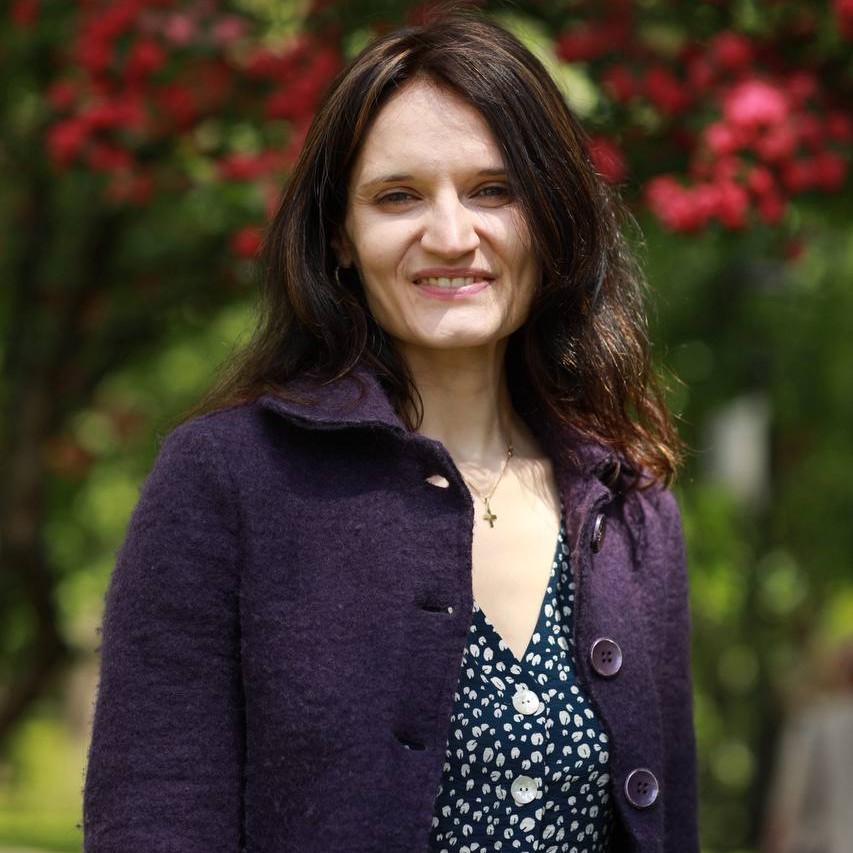
Dr Romina Istratii is Founding Director of the Institute of Domestic Violence, Religion & Migration (IDVRM) C.I.C. and Research Associate at the Institute for Christian Orthodox Studies (ICOS) in Cambridge. Until May 2025, she was UKRI Future Leaders Fellow and Lecturer in religion, international development and violence at the School of History, Religions and Philosophies at SOAS University of London and acted as co-chair of the SOAS Centre of World Christianity. Between 2020 and 2025, she acted as Principal Investigator of Project dldl/ ድልድል, a large research and innovation project funded by UKRI dedicated to developing culturally sensitive and faith-informed responses to domestic violence in Africa and Europe.
Disclaimer: IDVRM aims to serve as a platform that researchers internationally, especially in the non-western world, can use to disseminate their research. We do our best to ensure that authors who publish with us have conducted their research following the highest ethical standards, with decolonial reflexivity and principles of least harm to participants in mind. We do not require authors to submit ethical documentation, but we ask our authors to provide sufficient information about ethical procedures in their submissions. It is beyond the capacity of IDVRM to verify this information. Authors should be reached directly to respond to questions regarding their research.
Opinions expressed by authors contributing to our blog are those solely of the authors and do not necessarily represent the position of IDVRM, its Director or other team members. IDVRM is comprised of diverse individuals who are encouraged to share their experiences and opinions openly with recognition that other team members may have different experiences and positions. IDVRM does not claim to represent any one community and we understand that belonging to a specific group does not entitle any one of us to speak for all.