
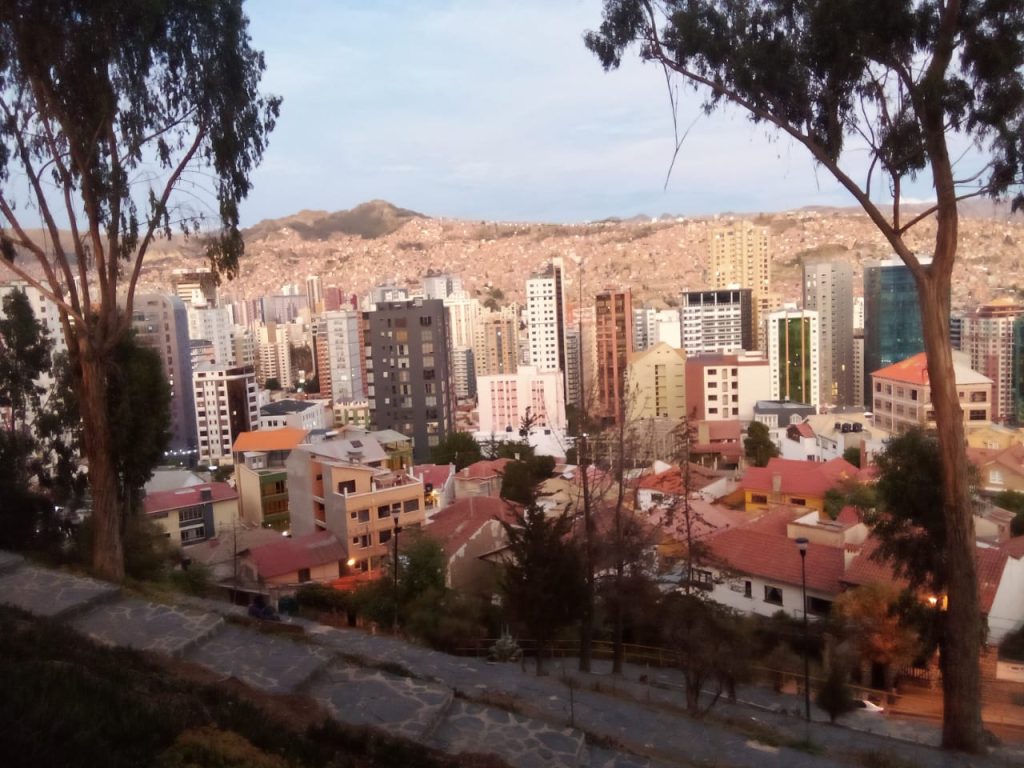
Copyright: Patricia Chulver
In this reflective blog essay, Patricia Chulver examines how sexual and gender-based violence in Bolivia becomes normalised within the domestic sphere through everyday social, familial, and institutional practices. Drawing on ethnographic research—particularly the study Rompiendo Silencios—and her own personal memories, she illustrates how abuse against girls and women is often trivialised, negotiated privately, or silenced by families, communities, and legal institutions. The essay argues that violence persists not simply as isolated acts but as part of a broader continuum shaped by patriarchal authority, class relations, and weak institutional accountability. While Bolivia has adopted progressive legal frameworks such as Law No. 348 to combat violence against women. The essay reflects on the cultural underpinnings of violence and contends that meaningful transformation requires not only legal reform but also coherent institutional practice and broader shifts in social attitudes.
“Violence enters everyday life not as an event that shatters the social order, but as something folded into the ordinary. Its work is accomplished not only through speech, but through silence”
Veena Das (2008)
Rompiendo Silencios (Breaking Silences) stands as a pioneering ethnographic study on criminal justice in Bolivia, exposing how violence against girls and adolescents – particularly in rural contexts – has been systematically trivialised through judicial, social, and familial practices that normalise abuse. One of the cases in Barragán’s (2005) research documents a thirteen-year-old girl in Tarija subjected to sexual violence by her stepfather and employer, revealing not only severe physical harm but also the symbolic processes through which victims are infantilised, stripped of agency, and rendered voiceless. Well into the early 2000s, it was common for rural families to send young girls to work as domestic servants under conditions of extreme vulnerability, where abuse was rendered invisible and, when exposed, resolved through economic settlements that protected perpetrators and silenced victims. This constellation of practices reflects a deeply entrenched system of structural violence embedded in everyday life and institutional responses.
Her case brought back the memory of Esperanza, a girl of my own age – around thirteen at the time – who worked in my childhood home, which also functioned as a clinic owned by my stepfather. She was brought from a rural area by an older man who appeared to be her father, offering her services as a domestic worker. Esperanza soon became my closest, almost only, friend. We were both leaving childhood behind, both enduring different forms of family abuse, and both profoundly isolated: she, confined entirely to that building; I, struggling with depression after moving in with my mother and her new husband.
One Sunday, after returning from one of the few visits I was allowed to make to my father, Esperanza was gone. Days later, the walls whispered that she had been raped by one of my stepfather’s employees. Her father came to negotiate and the attack was settled with money, allowing everyone involved to continue as if nothing had happened. Esperanza disappeared from my life, while those responsible remained living under the same roof as me.
As Rompiendo Silencios demonstrates, sexual violence does not appear as an isolated or exceptional event, but as the most extreme expression of a continuum sustained by prior and simultaneous conditions. Power relations – familial, class-based, and institutional – shape what can be named, negotiated, or silenced.
The research shows that violence is reinforced by institutional practices which privilege negotiations, legal transactions, and judicial decisions that protect perpetrators over victim reparation. Within families, male and patriarchal authority is preserved in the name of ‘family well-being’, even in extreme cases, while schools frequently resolve abuse informally to avoid harming perpetrators. As the anthropologist Rita Segato (2003) argues, Indigenous women who claim individual rights are often perceived to be threatening collective order, facing an imperative of loyalty that renders violence non-negotiable and unappealable. The transition from silence to speech remains exceptional: in Rompiendo Silencios, only eight of sixty-four victims reported abuse directly, with most cases emerging through ‘discovery’ rather than complaint. The ethnography reveals that rape is embedded in everyday life, that access to justice is slow and obstructed, and that weak state presence allows customary practices – far beyond Indigenous contexts – to prevail.
Although Bolivian penal law evolved from early sanctions for maltreatment to harsher penalties after 1999, and international frameworks such as the Convention on the Elimination of All Forms of Discrimination Against Women (CEDAW)(1979) and the Convention of Belém do Pará (1995) marked decisive normative shifts, a deep gap persists between legal reform and social practice. Bolivia’s Law No. 348 (2013) established a comprehensive framework recognising multiple forms of violence and mandating state prevention, protection, and punishment mechanisms. Yet implementation remains uneven, with persistent impunity and revictimisation exposing the endurance of patriarchal authority, from the family to the state.
While law alone cannot transform morality, a strong and coherent legal framework can influence cultural behaviour when it operates consistently at the institutional level.
My work as a human rights defender has brought me into close contact with incarcerated women through legal assistance and training programmes. Despite Bolivia’s progressive legal framework, prison realities reveal a more complex picture. According to off-the-record information shared by a former prison director, official incarceration figures obscure the fact that a significant number of women are imprisoned under Law No. 348 after being falsely accused of domestic abuse against children or elderly relatives. Such accusations are increasingly used to resolve inheritance disputes or property conflicts. Rather than reflecting the eradication of abuse, this instrumentalisation of the law underlines its cultural persistence and a growing institutional backlash.
According to the Association for the Prevention of Torture (APT), the female prison population in Bolivia increased from 1,871 in late 2023 to approximately 2,150 by mid-2024, with a significant proportion of women incarcerated for drug-related or non-violent offences. At the same time, official data from the Observatorio Boliviano de Seguridad Ciudadana y Lucha Contra las Drogas (OBSCD), domestic violence accounts for 77.58% of all reported high-vulnerability crimes against women between 2021 and September 2025. In 2025 alone, it represents 76.13% of reported cases. Sexual violence also shows a strong impact on minors: 67.03% of abuse cases in 2025 involved victims under 18 years of age. Fragmented data systems, institutional corruption, and weak investigative capacity severely distort official figures and limit accountability. Research such as Rompiendo Silencios shows that sexual violence must be understood as a structural phenomenon embedded in everyday social relations, one that cannot be fully captured or resolved by legal frameworks alone.
Rita Segato argues in Las estructuras elementales de la violencia (2003) that social and sexual orders cannot be transformed by decree: desire, morality, and patterns of maltreatment are not reshaped simply through legislation, and communities themselves often continue to reproduce and administer violence. She highlights the contradiction between modern, egalitarian legal frameworks and the persistence of gender as a status system. Even where spectacular forms of violence are condemned, everyday forms rooted in domestic and familial relations – where most gender crimes occur – remain structurally tolerated. For Segato, the law reveals its ambivalence in how it selectively recognises certain crimes while leaving intact the deeper violent economy of gender.
This essay, however, advances a qualified counter-argument. While law alone cannot transform morality, a strong and coherent legal framework can influence cultural behaviour when it operates consistently at the institutional level. The Dutch gedoogbeleid (tolerance policy) on cannabis offers a relevant comparison. Developed in the 1970s to reduce harm, it aligned legal discourse, policing, and judicial practice, transforming cannabis from a symbol of moral transgression into a regulated public health issue. Cultural change emerged not through moralisation but through institutional coherence.
This incoherence is stark in Bolivia. Several high-profile cases – including the death of María Fernanda Paucara in police custody, accusations involving political elites, and repeated scandals surrounding intrafamilial violence – reveal a profound gap between institutional discourse and private practice. Violence is condemned when externalised but minimised or defended when committed by insiders. This exemplifies how patriarchal power operates across homes, institutions, and political authority, undermining the effectiveness of protective legal frameworks.
The structural problem of violence against women is fundamentally cultural and, in many cases, linked to religious beliefs and customs. In Bolivia, the limited research directly linking religion and gender-based violence reflects a persistent blind spot. Violence is sustained less through doctrine than through moral economies shaped by an intersection of colonial Catholic institutions and Andean worldviews. Despite rhetorical invocations of complementarity, these moral structures continue to privilege male authority, family unity, and silence over accountability.
I began this essay with a lump in my throat and close it with a heart still beating. Violence is deeply rooted in cultural practice, but history shows that structures change when attitudes change. Recognising who runs our families as well as our countries, how they embody the laws they enact, and which moral economies they reproduce is not merely an intellectual exercise; it is a step towards collective coherence, accountability, and transformation.
References
Association for the Prevention of Torture (APT). 2024. Women in Prison: Analysis of the National Preventive Mechanism — Bolivia. APT Country Report. Accessed March 2, 2026. https://www.apt.ch/sites/default/files/2024-12/bolivia_country_report.pdf
Bolivia. 2013. Ley N.º 348: Ley Integral para Garantizar a las Mujeres una Vida Libre de Violencia. Promulgada el 9 de marzo de 2013. Texto actualizado 2016.
Calla, Pamela; Barragán, Rossana; Salazar de la Torre, Cecilia; Arteaga, Teresa; Soliz, Carmen. 2005. Rompiendo silencios: una aproximación a la violencia sexual y al maltrato infantil en Bolivia. La Paz: Plural Editores.
Das, Veena. 2007. Life and Words: Violence and the Descent into the Ordinary. Berkeley: University of California Press.
Galtung, Johan. 1990. “Cultural Violence.” Journal of Peace Research 27 (3): 291–305.
Runa, Juana. 2021. “#PolicíaAsesinaYFeminicida. ¡Justicia para María Fernanda!: no fue suicidio, fue feminicidio.” La Izquierda Diario, 10 de octubre de 2021.
https://www.laizquierdadiario.com/Justicia-para-Maria-Fernanda-no-fue-suicidio-fue-feminicidio
Observatorio Boliviano de Seguridad Ciudadana y Lucha Contra las Drogas (OBSCD). (2025). Delitos de alta vulnerabilidad contra la mujer. Boletín N° 10 (actualización a septiembre de 2025). Ministerio de Gobierno, Estado Plurinacional de Bolivia. https://obscd.mingobierno.gob.bo
Segato, Rita Laura. 2003. Las estructuras elementales de la violencia: Ensayos sobre género entre la antropología, el psicoanálisis y los derechos humanos. Buenos Aires: Prometeo Libros.
United Nations. 1979. Convention on the Elimination of All Forms of Discrimination Against Women (CEDAW). Adopted 18 December 1979.
Organization of American States (OAS). 1994. Inter-American Convention on the Prevention, Punishment and Eradication of Violence against Women (Convention of Belém do Pará). Adopted 9 June 1994.
About the Author
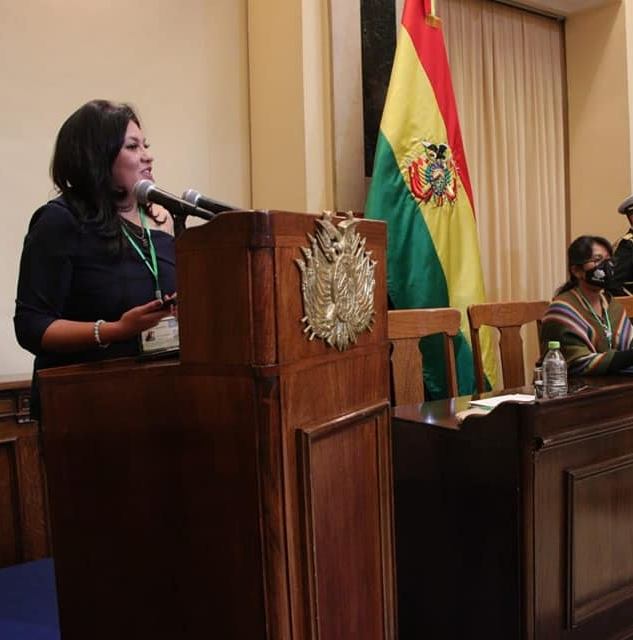
Patricia Chulver is a Bolivian journalist, writer, and researcher whose work examines the intersections of body, power, and memory in Latin America. Trained in Philosophy and Political Science, she brings over fifteen years of experience in human rights, civic dialogue, drug policy, and gender justice. Her research and writing explore how political authority, cultural norms, and intimate life shape experiences of violence and resistance. She is currently completing Historias de amor y hambre, a historical novel that investigates the embodied dimensions of power and the politics of memory. Patricia can be reached at: pchulver@gmail.com
Disclaimer: IDVRM aims to serve as a platform that researchers internationally, especially in the non-western world, can use to disseminate their research. We do our best to ensure that authors who publish with us have conducted their research following the highest ethical standards, with decolonial reflexivity and principles of least harm to participants in mind. We do not require authors to submit ethical documentation, but we ask our authors to provide sufficient information about ethical procedures in their submissions. It is beyond the capacity of IDVRM to verify this information. Authors should be reached directly to respond to questions regarding their research.
Opinions expressed by authors contributing to our blog are those solely of the authors and do not necessarily represent the position of IDVRM, its Director or other team members. IDVRM is comprised of diverse individuals who are encouraged to share their experiences and opinions openly with recognition that other team members may have different experiences and positions. IDVRM does not claim to represent any one community and we understand that belonging to a specific group does not entitle any one of us to speak for all.
AI Use: IDVRM may use AI tools for editing and proofreading purposes to improve language, syntax and grammar. Essays must be the original work of the author.