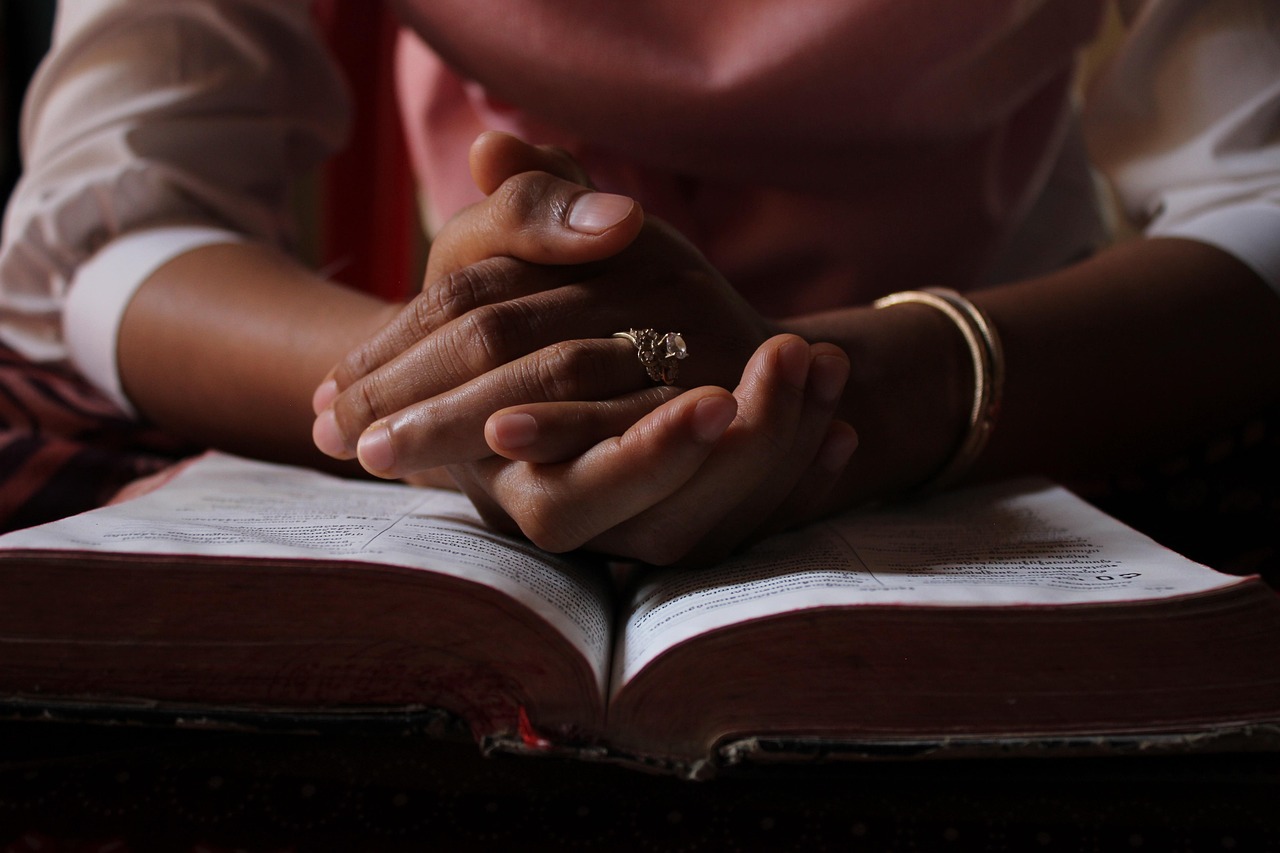
Source: Pixabay
In this evidence-based reflective essay, Josephine Kanyiva exposes the hidden realities of abuse often experienced by ministers’ wives within African church contexts, drawing on personal lived experience and findings from a master’s thesis on the Africa Inland Church in Kenya. The essay highlights how spiritual authority, cultural expectations and misused theology create systems that silence and harm women behind the pulpit. Using African feminist theological frameworks and narrative methodology, the reflection names, disrupts and challenges these oppressive structures while honouring the voices of the women who shared their stories. Ultimately, it calls the church to reckon with its own complicity and to reimagine pastoral care, theology and community life in ways that restore dignity, agency and holistic well-being for ministers’ wives.
In many African churches, the pulpit commands respect, reverence and authority. Ministers are often seen as spiritual shepherds, guiding their congregations with wisdom and grace. Yet, behind the curtain of church life lies a reality that is seldom spoken about: the lived experience of ministers’ wives who silently endure emotional abuse. Their testimonies reveal not only private struggles but also how religious and cultural systems can unintentionally perpetuate cycles of suffering and pain.
My work in this area is not just academic or professional; it is personal, spiritual and deeply rooted in a commitment to justice and healing. I draw directly from my master’s dissertation, titled “Predictors of Emotional Abuse Among Ministers’ Wives in the Africa Inland Church, Kenya.” Through this research, the documented patterns in scholarly studies consolidated the personal narratives, revealing a systemic crisis that cannot be ignored. To ensure that these untold stories were gathered with the highest standards of integrity and care, my master’s thesis was conducted within a rigorous ethical and safeguarding framework which engaged ten ministers’ wives from the Africa Inland Church in Makueni County, Kenya, through a narrative methodology that placed their safety, dignity and agency at the centre. Participation was entirely voluntary, with informed consent carefully secured at every stage. To safeguard participants’ wellbeing and confidentiality, I employed trauma‑informed interviewing techniques, anonymised their accounts through pseudonyms and facilitated access to support services to mitigate risks of re‑traumatization. This ethical commitment was a foundational principle, an intentional act of honouring the courage of the women who entrusted me with their deeply painful truths.
The Origin of My Journey
My interest in the lives of ministers’ wives began not in a library, but in the quiet, hidden rooms of my own life. It started with a question that echoed from my childhood into my own marriage; who cares for the caregiver? I was born into a pastor’s family, where the sacred image presented to the congregation starkly contrasted with the violence I witnessed at home. Later, as an adult, I entered a marriage union with a clergy man, believing that I understood the pressures of ministry life. Instead, I found myself living the very reality I had once only observed. I became a victim of physical, sexual and emotional abuse, a private hell hidden behind a public facade of holiness. This dual experience, first as a daughter and then as a wife, forced me to see the devastating pattern I had long felt was there.
My interest in the lives of ministers’ wives began not in a library, but in the quiet, hidden rooms of my own life. It started with a question that echoed from my childhood into my own marriage; who cares for the caregiver? I was born into a pastor’s family, where the sacred image presented to the congregation starkly contrasted with the violence I witnessed at home. Later, as an adult, I entered a marriage union with a clergy man, believing that I understood the pressures of ministry life. Instead, I found myself living the very reality I had once only observed. I became a victim of physical, sexual and emotional abuse, a private hell hidden behind a public facade of holiness. This dual experience, first as a daughter and then as a wife, forced me to see the devastating pattern I had long felt was there.
In many African churches, including the Africa Inland Church where I have served for the longest period, the minister is often revered, but the wife of the minister is often expected to serve silently, impeccably and without uttering any complaint. My personal pain gave way to a profound realisation that my story was not unique. Conversations with other women in ministry circles revealed the same troubling pattern of emotional neglect, spiritual manipulation and social isolation, all masked by ministers’ veneer of piety. This knowledge compelled me to act. Having navigated my own path to survival and wholeness, I was determined to create safe spaces where such women could share their stories without fear of judgment or reprisals. What I heard was not only heartbreaking, but also a call to turn my personal story into a public ministry. My journey through the shadows has led me to be an advocate for others, contributing to a world where the caregiver is truly cared for.
In a context where the voices of ministers’ wives are so often silenced, I believed that the method of inquiry itself had to be an act of restoration. I was not merely collecting data; I was creating a safe space for storytelling and a catalogue of experiences. Drawing on the legacy of African women theologians, I chose a narratology method for data collection because it is a powerful method that the Circle of Concerned African Women Theologians (CCAWT) uses to centre women’s stories in theological discourse (Mombo, 2019:3-6). For us, storytelling is a significant art that shows where people fit into society (Mombo, 2022:4), and without a narrative identity, human beings cannot survive (Njoroge, 2001:22). This approach is instrumental in establishing contra-cultures to in institutions cantered on male authority and in bringing healing (Njoroge, 2001:22).
The path to understanding the pain of ministers’ wives was illuminated by the powerful triad of African feminist theology: to name, to disrupt and to challenge (Kanyoro, 2001; Oduyoye, 2001). This framework was not merely an academic lens, but a moral compass for my work. It began with the sacred act of naming: giving language to the silent suffering that culture and distorted theologies had taught such women to endure as a virtue, what Mombo (2022:13) critically identifies as the theology of “vumilia”, which translates as ‘perseverance.’ By encouraging them to name their experiences as emotional abuse, the participants collectively performed an act of resistance, transforming private shame into a validated, communal truth. This naming, in turn, became the foundation for disruption. The participants had to actively dismantle the harmful interpretations grounded in androcentric and toxic patriarchal cultures and interpretations of scripture and cultural customs that supported their oppression, following Njoroge’s (2000:118-121) call to question these very foundations. But my mission could not stop at critique; the ultimate goal, as Phiri (2004:23) insists, was to challenge by reconstructing, “not just to critique, but to reconstruct.” This theoretical framework demanded that I not only document a broken system but also participate in imagining a new one, a theology of wholeness, rooted in African Christian heritage, that could offer life-affirming alternatives for these women and their communities, aligning with Mombo’s (2018:45) vision of transforming communities into spaces where all can flourish.
Unmasking the Sacred Silence
Reading through the stark findings of my research, I am struck not just by the quantitative evidence about the scope of the problem, but also by the painful, familiar patterns they reveal. The data on emotional abuse among ministers’ wives are not an abstract concept; they are evidence of a broken system, an architecture of control built with specific, identifiable predictors. Reflecting on these findings forces me to move beyond the “what” and into the painful “how” and “why.”
The Spiritual Power Play
The most prominent driver of abuse is the misuse of the husband’s spiritual authority. The study found that ministers often leverage their revered position to justify controlling behaviour, framing it as “divinely sanctioned leadership”. Some wives shared that they were routinely prevented from expressing their opinions, as one husband ended every dispute by declaring himself the ultimate authority. Another was explicitly forbidden from preaching, her spiritual calling stifled by her husband’s unilateral power. This creates a profound power imbalance, making it nearly impossible for wives to challenge abuse without being accused of spiritual disobedience (Kobyliński, 2022; Stark, 2007).
Scripture as a Weapon
The research highlights a deeply insidious pattern the weaponisation of the Bible. Abusive husbands were found to selectively quote scriptures about wifely submission while ignoring passages on mutual love and respect. This manipulative use of religious text traps women in a cruel dilemma, forcing them to choose between their safety and their faith. When a wife’s plea for equality is labelled “unbiblical,” the abuse is effectively sanctified, making it incredibly difficult to name or escape (Westenberg, 2017).
The Financial Trap
Economic control emerged as a powerful tool for entrapping women. In many cases, the minister was the sole breadwinner and exercised total control over all household finances, denying his wife access to even basic household money. This financial stranglehold, a classic form of economic abuse, eliminates any practical means of escape, leaving the wife completely dependent and trapping her in the abusive relationship (Vyas, 2012).
The Violence of Silence
Beyond words, the study found that silence itself is a potent enforcer of emotional abuse. Many wives described their husbands using prolonged, deliberate silence as a form of punishment. This emotional withdrawal is a brutal tactic used to erode a woman’s confidence and sense of self-worth, leaving her isolated and insecure within her own home (Stark, 2007).
The Burden of Perfection
The immense societal pressure to be the “perfect pastor’s wife” was identified as a major contributing factor. These women face unrealistic expectations to maintain a flawless public image, tirelessly supporting their husbands while managing home and church duties. This intensely controlled environment forces them to suppress their own needs and pain, with many reporting that they feel they are “losing themselves” in the role, a phenomenon that exacerbates their vulnerability to abuse (Nwaka, 2020).
The Betrayal of Infidelity
The study also confirmed infidelity as a significant and devastating pattern. Wives reported discovering their husbands’ affairs with congregants, a betrayal that carries a unique public humiliation. These shatters trust not only in the marriage but also in the spiritual leadership of the church, leaving the wife isolated with her grief, forced to smile while her world silently falls apart (Munyoki et al., 2023).
Concluding Remarks
This reflection moves the conversation beyond private marital strife, framing the abuse of ministers’ wives as a systemic failure. The courage of these women in sharing their stories provide a clear roadmap for churches: the need to re-examine power structures, re-articulate theological teachings with awareness of their misuse, and create robust, confidential support systems.
References
Kanyoro, M. R. A. (2001) Introducing feminist cultural hermeneutics: An African perspective. In M. R. A. Kanyoro (Ed.), A feminist Introduction to the New Testament (pp. 1-25). Pilgrim Press.
Kobyliński, A. (2022). The problem of religious psychomanipulation in the context of the global pentecostalization of Christianity. Man, and Society, 54, 99–115. https://doi.org/10.14746/cis.2022.54.7
Mombo, E. (2008) Women’s Leadership in Church and Society: A Theological Perspective. In Phiri I.A., & Nadar S. (Eds.), On Being Church: African Women’s Voices and Visions. Geneva: World Council of Churches.
Mombo, E. (2018) Theological education as a tool for twenty-first-century mission in Africa. International Review of Mission, 107(2), pp.37-48.
Mombo, E. (2018) Women and leadership in the African church: A circle of concerned African women theologians’ perspective. Journal of Theology for Southern Africa, 161, 38-51.
Mombo, E. (2019) The Circle of Concerned African Women Theologians: A historical perspective. Journal of African Christian Biography, 4(2), 3-6.
Mombo, E. and Joziasse, H. (2022) Deconstructing Gendered Vumilia (Perseverance) Theology in Times of the Gender-based Violence Pandemic. Journal of International Women’s Studies, 24(4). https://vc.bridgew.edu/jiws/vol24/iss4/14/
Munyoki, D.M., Katola, M.T., Michael, T. and Mwaura, P. (2023) Factors Influencing Sexual Infidelity among the Married In Africa Inland Church-Kitui County, Kenya. International Journal of Research and Innovation in Social Science, 7(4), 714-721.
Njoroge, N.J., (2000) Kiama kia Ngo:-An African Christian feminist ethic of resistance and transformation (Vol. 2). Legon Theological Studies Series.
Njoroge, N.J. (2002) Cultural Hermeneutics in African Women’s Theology. In Dube W.M., & Njoroge N.J. (Eds.), Talitha Cum! Theologies of African Women. Cluster Publications.
Nwaka, E., Akinnawo, E., Awaritefe, A. and Akpunne, B. (2020) Emotional exhaustion in ministry as predictor of sexual attitudes of Nigerian Christian clergy’, Archives of Current Research International, 19(3), 1-14. https://doi.org/10.9734/acri/2019/v19i330159
Oduyoye, M.A. (2001) Introducing African Women’s Theology. Sheffield: Sheffield Academic Press.
Phiri, I.A. (2004) Southern Africa. In: J. Parratt, ed. An introduction to Third World Theologies. Cambridge: Cambridge University Press, pp.137-162.
Stark, E. (2007) Coercive Control: The Entrapment Of Women In Personal Life (online edn, Oxford Academic, 31 Oct. 2023), https://doi.org/10.1093/oso/9780195154276.001.0001.
Vyas, S. (2021) Exploring the Roles of Familial and Dating Relationship Violence and Sexual Assault on Adolescent Girls and Young Women’s Risk of Partner Violence in Tanzania. Violence Against Women, 28(5), 1124-1138. https://doi.org/10.1177/10778012211014555
Westenberg, L. (2017) ‘When She Calls for Help’—Domestic Violence in Christian Families. Social Sciences, 6(3), 71. https://doi.org/10.3390/socsci6030071
About the Author
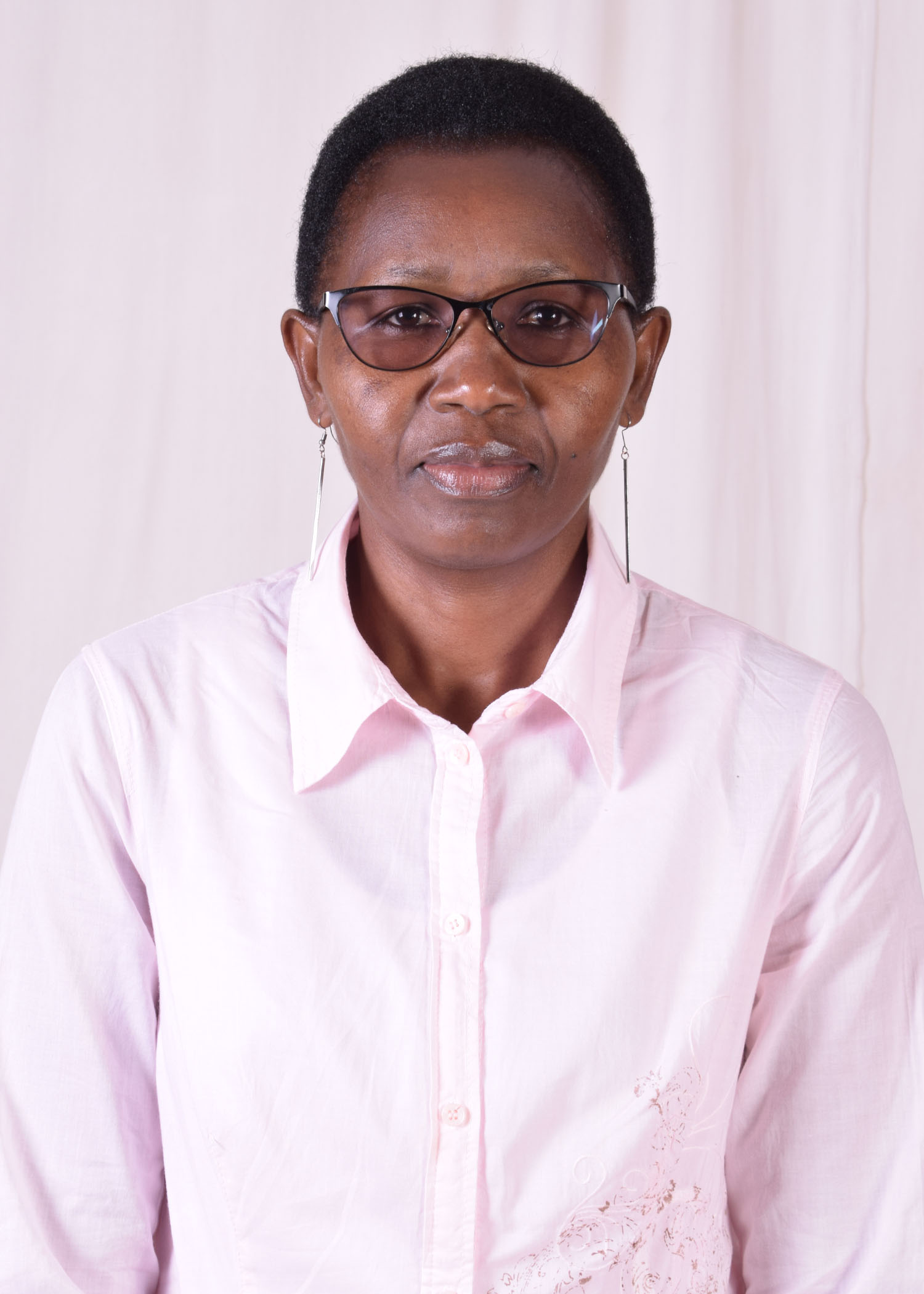
Josephine Kanyiva is a theologian, clergy member and part-time lecturer at Kiriri Women’s University of Science and Technology in Kenya. She stands at the intersection of faith, academia and lived experience. Her calling is to advocate for the well-being of ministers’ wives, empowering them to find their voices and reclaim their identities. She believes in a faith that liberates and she dedicates her work to building a church that is a true sanctuary for all, especially those behind the pulpit. Brought up in the Africa Inland Church, Kenya, where she served for over 15 years before transitioning to Pentecostal churches, she holds a Diploma in Bible and Theology from Ukamba Bible College, a Bachelor’s Degree in Theology from Africa International University, Kenya, and a Master’s Degree in Systematic Theology from St. Paul’s University, Limuru. She is currently a member of Ruach Assemblies, Nairobi. Josephine can be reached at: slphina15@gmail.com
Disclaimer: IDVRM aims to serve as a platform that researchers internationally, especially in the non-western world, can use to disseminate their research. We do our best to ensure that authors who publish with us have conducted their research following the highest ethical standards, with decolonial reflexivity and principles of least harm to participants in mind. We do not require authors to submit ethical documentation, but we ask our authors to provide sufficient information about ethical procedures in their submissions. It is beyond the capacity of IDVRM to verify this information. Authors should be reached directly to respond to questions regarding their research.
Opinions expressed by authors contributing to our blog are those solely of the authors and do not necessarily represent the position of IDVRM, its Director or other team members. IDVRM is comprised of diverse individuals who are encouraged to share their experiences and opinions openly with recognition that other team members may have different experiences and positions. IDVRM does not claim to represent any one community and we understand that belonging to a specific group does not entitle any one of us to speak for all.
AI Use: IDVRM may use AI tools for editing and proofreading purposes to improve language, syntax and grammar. The essay is the original work of the author.